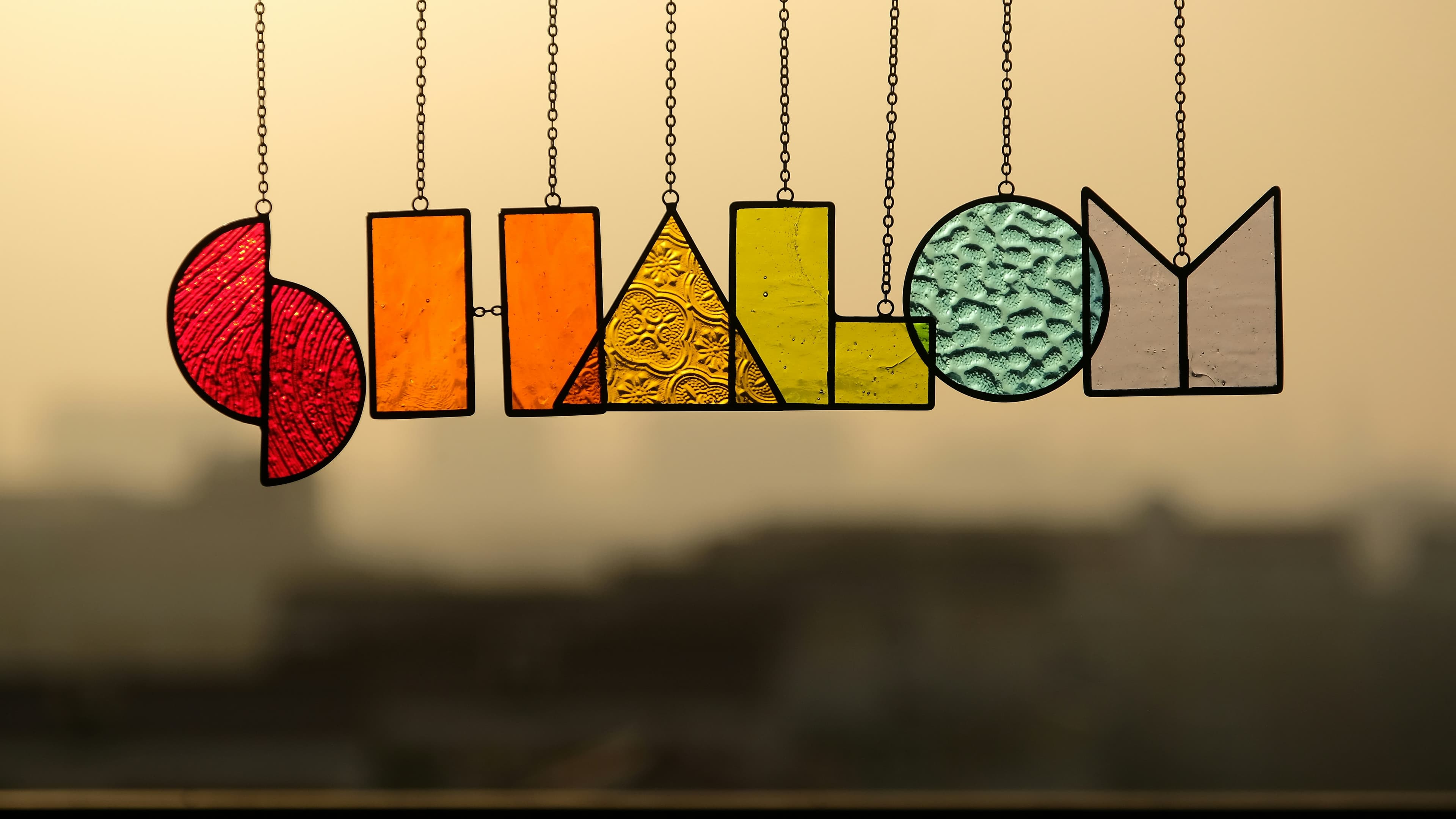
My Hebrew Journey
11 minIn this episode, I share my personal Hebrew learning journey - from why I started learning the language to how I’ve made progress over the past two years. I talk about the challenges I’ve faced, the methods that have worked best for me, and how my love for the language has grown!
Read the full transcript (English & Hebrew) belowChapters
- 00:00Intro — quick about-me
- 01:30Why I wanted to learn Hebrew
- 03:00What learning German first taught me
- 04:30Finding a tutor — when progress became real
- 06:30The hardest part — Hebrew sounds and pronunciation
- 08:00Spaced repetition and Anki
- 09:30Where I am now and where I'm going
- 10:30My one piece of advice — enjoy the journey
Vocabulary from this episode
Tap a word to see it in context.
- 01מסעmasajourney
- 02שפת אםsfat emnative language / mother tongue
- 03תרבותtarbutculture
- 04מורה פרטיmoreh pratiprivate tutor (male)
- 05דקדוקdikdukgrammar
- 06הגייהhagiyapronunciation
- 07חזרה מרווחתchazara meruvachatspaced repetition
- 08עקביותakeviutconsistency
- 09רמת בינייםramat beinayimintermediate level
- 10טעויותta'uyotmistakes
Frequently asked
Full transcript
Show notes
What you'll learn in this episode
- Why I started learning Hebrew — and why "to speak with my husband" was only half the answer
- What learning German first taught me about how I learn languages
- The single change that finally unlocked real progress: a Preply tutor
- The flashcard method that helped Hebrew sounds stop blurring together
- Where I am now (and where I'm going) on the road to fluency
Quick introduction
I'm Steph, 28, and I live in Swindon, England with my husband Alon and our dog Sheena. Alon and I met five years ago in Berlin — I was finishing my Master's, he was working for EL AL (the Israeli airline). I'm now a Data Scientist (מדענית נתונים / mada'anit netunim) at Spotify. This podcast is the side project I wanted in my spare time.
Today's episode is about how I got to intermediate Hebrew — what worked, what didn't, what I'd do differently.
Why Hebrew, really
The obvious reason is Alon — wanting to speak with him in his native language (שפת אם / sfat em), with his family when we visit Israel, and to understand his culture (תרבות / tarbut) more deeply.
But there's a second reason that took me longer to articulate: the way you think depends on the language you speak in. Learning someone's language teaches you about who they are. I always loved learning new things, and Hebrew offered an entire culture and a way of seeing the world to walk into.
German first — and what it taught me
Before Hebrew, I was learning German while living in Berlin. At the time I thought German was punishingly hard — the grammar, the pronunciation. Now that I'm two years into Hebrew, I look back and think German was the easier one.
But the value of those German years wasn't the German itself. It was figuring out how I personally learn best — what techniques stuck, which fizzled out, and how much daily exposure I actually needed. Lessons I carried over to Hebrew:
- Practice every day, even just 10 minutes. Consistency (עקביות / akeviut) beats intensity.
- Surround yourself with the language. Easier in Berlin with German on every street; harder with Hebrew from England, but still possible through podcasts, music, and TV.
- Have a routine built around the language — not "I'll squeeze in some Hebrew" but a fixed, protected slot.
Where I started — and the moment progress became real
I started Hebrew about two years ago. The first months were chaos — Alon would teach me odd words and phrases, I dabbled with Duolingo, but nothing was sticking properly. I needed structure.
The change was finding a private tutor (מורה פרטי / moreh prati) on Preply. From the first lesson it felt different — we practiced speaking and worked through grammar (דקדוק / dikduk) at the same time. I now have a weekly lesson with the same tutor; he gives me homework (שיעורי בית / shiurei bayit) between lessons, I send it in, we review it next week.
If you can afford it and can fit it in, a private tutor — especially in the early months — is the single biggest accelerator I'd recommend.
The hardest part — Hebrew sounds
In the beginning the sounds (צלילים / tzlilim) and pronunciation (הגייה / hagiya) were brutal. Every Hebrew word sounded like every other Hebrew word. New vocabulary would all blur together in my head, and I couldn't hold any of it.
Two methods finally helped:
- Flashcards (כרטיסי פלאש / kartisei flash)
- Spaced repetition (חזרה מרווחת / chazara meruvachat) — using the Anki Pro app
The way spaced repetition works: when you encounter a word you don't remember, you see it often. As it sticks, you see it less. The system manages the schedule for you so you only spend time on what you actually need to review. This was the single biggest unlock for vocabulary.
Where I am now
I'd describe myself as intermediate (רמת ביניים / ramat beinayim). I can hold conversations and read books and articles. The current phase of my learning is consumption — listening to podcasts, reading, watching Israeli TV.
The goals from here:
- Speaking fluently (לדבר באופן שוטף / ledaber be'ofen shotef)
- Reading more Hebrew books
- Using Hebrew in real-life situations whenever possible — and this podcast is part of that
My one piece of advice
If I could leave you with one thing — to fellow Hebrew learners, or anyone learning any language — it would be: enjoy the journey. There will be weeks when it feels like you're making zero progress. Every step forward IS progress, even when you can't see it.
Don't be afraid to make mistakes (טעויות / ta'uyot). They're not a sign you're failing — they're how learning actually happens.
And find ways to make it enjoyable. Music, films, conversations, podcasts, anything that doesn't feel like a chore. If learning feels like punishment, you'll quit. If it feels like fun, you won't.
Your journey?
If you're on your own language-learning journey, I'd love to hear about it. Drop me an email or comment via the contact page — what's working, what's hard, what you'd recommend. And if there's a topic you'd like covered, send it my way.
Full Hebrew + English transcript below.